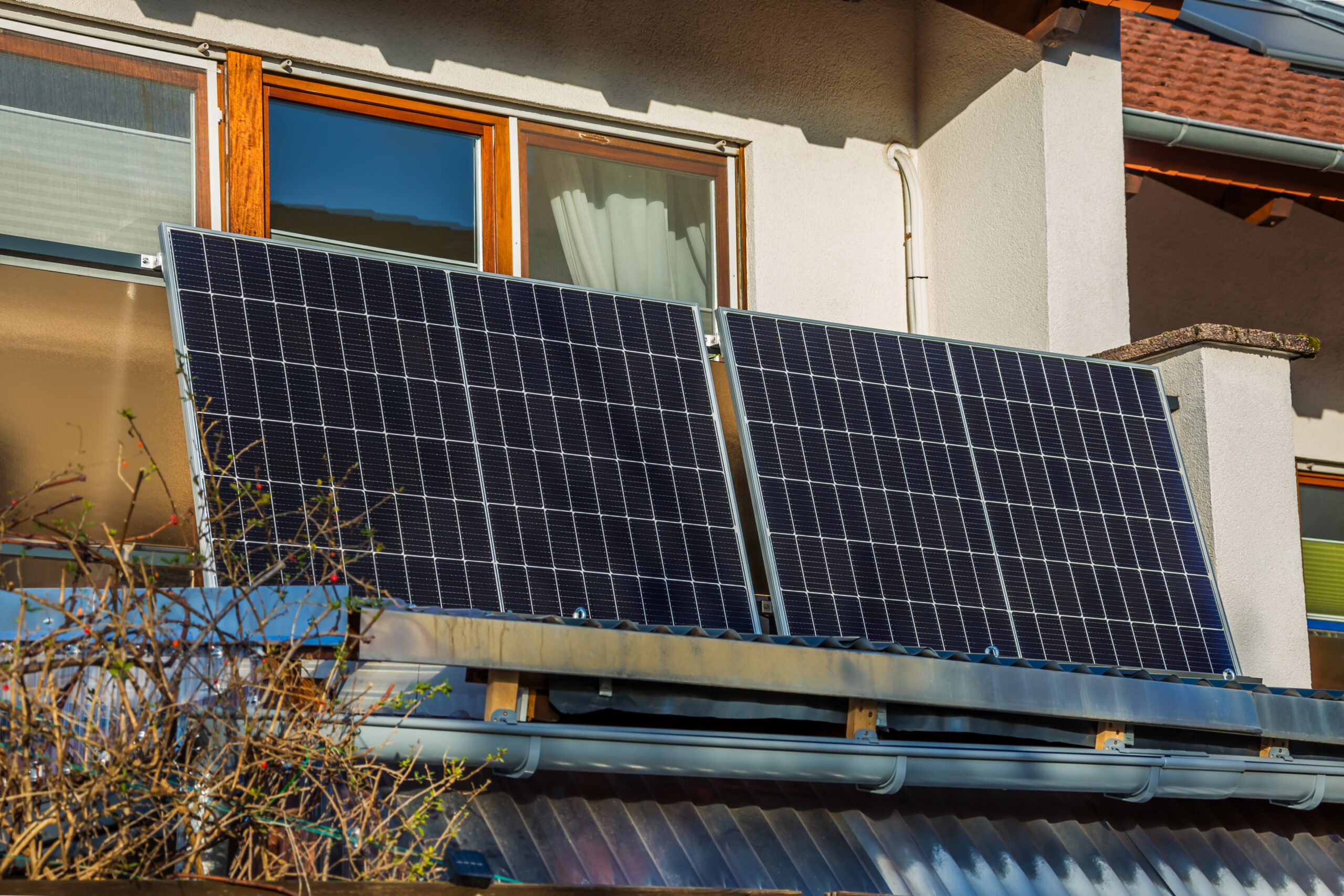
Plug-in solar panels have now arrived in Great Britain. From 27th August 2026, approved plug-in solar systems can legally be purchased and used in homes across England, Scotland and Wales. The change provides a simpler way for households to generate electricity without installing a conventional rooftop solar PV system.
Unlike traditional solar PV installations, plug-in solar systems are designed to be connected directly to a suitable household socket. They can potentially be used on balconies, terraces, gardens or other suitable locations, making them particularly attractive to homeowners and residents of flats who may not have access to a roof.
However, while these systems are designed to be relatively simple to install, they are still electrical equipment capable of generating electricity and therefore need to be considered from a fire safety perspective.
What are plug-in solar panels?
Plug-in solar panels, sometimes referred to as plug-and-play or balcony solar, are small photovoltaic systems that generate electricity from sunlight. The electricity is converted by an inverter and supplied to the property’s electrical installation through a suitable socket.
The Government’s current framework allows compliant systems with an output of up to 800W to be connected to a standard domestic socket. The systems must meet specified safety requirements, with an interim product specification introduced to support their safe introduction to the market.
This is different from a conventional solar PV installation, which is normally permanently connected to the property’s electrical installation by a competent installer.
Are plug-in solar panels safe?
As with any electrical equipment, there are potential fire and electrical safety risks if equipment is defective, poorly manufactured, incorrectly installed or improperly used.
The Government commissioned an electrical safety study before introducing the new arrangements. Testing of representative plug-in PV systems found that the systems could operate safely within the tested domestic electrical installations, although variations in product performance were identified. This is one reason why the use of compliant products and appropriate safety requirements is important.
The London Fire Brigade has also highlighted the potential risks associated with the new technology, particularly where systems are installed incorrectly or where equipment is damaged or obstructs escape routes.
Residents should therefore:
- Only purchase systems from reputable manufacturers and retailers.
- Ensure the equipment meets the applicable UK safety requirements.
- Follow the manufacturer’s installation, operation and maintenance instructions.
- Never modify or tamper with panels, cables, plugs, inverters or other components.
- Stop using the equipment if there are signs of overheating, burning smells, buzzing, visible damage or repeated electrical tripping.
- Ensure panels and associated equipment do not obstruct escape routes, windows, doors, balconies or access for firefighters.
Particular considerations for flats and communal buildings
Plug-in solar panels may present additional considerations in blocks of flats and other residential buildings. For example, a resident may wish to install panels on a balcony. While this may appear straightforward, balconies can form part of the means of escape, provide firefighter access or be located adjacent to combustible external wall systems.
The London Fire Brigade advises that plug-in solar panels and associated equipment should not obstruct shared balconies, corridors, walkways, windows or designated escape routes. It also recommends that panels are not installed on combustible external wall systems or timber balconies.
There may also be implications for the building’s management arrangements, insurance, lease conditions or other restrictions. Residents of rented properties or flats should therefore speak to their landlord, freeholder, housing provider or managing agent before installing a system.
Where a building is undergoing, or is awaiting, external wall or cladding remediation, installation should be carefully considered and may need to be postponed until the works have been completed.
What should Responsible Persons and building managers consider?
For those responsible for the fire safety of residential buildings, plug-in solar panels should be treated as an emerging electrical fire safety consideration. Under the Regulatory Reform (Fire Safety) Order 2005, the Responsible Person has duties to take general fire precautions and undertake a suitable and sufficient fire risk assessment. Where plug-in solar systems are present, their potential impact on the building’s fire safety arrangements should therefore be considered.
A sensible management approach is to establish a clear approval process for residents wishing to install plug-in solar equipment. This provides an opportunity to check that the proposed location will not:
- Affect the means of escape;
- Obstruct firefighter access;
- Affect balconies or communal areas;
- Create issues with combustible external wall systems;
- Conflict with ongoing building remediation;
- Introduce unsuitable electrical equipment or connections.
Where outdoor electrical sockets are used, they should be weatherproof and appropriately rated, with outdoor installations meeting a minimum IP65 rating to reduce the risk of water ingress and associated electrical faults. Where electrical work is required, a competent person should be used.
Responsible Persons should also be aware that solar panels can continue to generate electricity during daylight hours. Consequently, information regarding the presence and location of such systems may be relevant to emergency planning and firefighting operations.
What does this mean for Fire Risk Assessments?
As plug-in solar systems become more common, they should be considered as part of the Fire Risk Assessment. The presence of a system does not automatically mean that a fire safety deficiency exists. However, the assessor should consider factors such as:
- Where the panels and associated equipment are located;
- Whether they obstruct or affect escape routes;
- Whether they are positioned on balconies or near combustible materials;
- Whether they are attached to or located adjacent to external wall systems;
- The condition of cables, plugs, inverters and associated equipment;
- Whether suitable management arrangements are in place;
- Whether the Responsible Person is aware of the installations; and
- Whether emergency information needs to identify the presence of the equipment.
For blocks of flats, it may therefore be appropriate for the Responsible Person or managing agent to maintain a record of approved installations and establish clear requirements for residents.
A new consideration for residential fire safety
Plug-in solar panels represent a significant change in the way residents can generate electricity within their homes. Their introduction is likely to result in increasing numbers of installations, particularly in flats, rented accommodation and properties without conventional rooftop solar.
The technology itself is not inherently unsafe, but poor-quality equipment, inappropriate installation, damage, electrical faults or poor positioning could introduce additional fire safety risks.
For homeowners, the key message is to use compliant equipment, follow the manufacturer’s instructions and avoid obstructing escape routes.
For landlords, managing agents and Responsible Persons, the introduction of plug-in solar panels provides another reason to review building management arrangements and ensure that their potential impact on the building’s fire safety strategy is properly considered.
If you are responsible for the fire safety of a residential building and would like advice on how plug-in solar panels should be considered within your Fire Risk Assessment, please get in touch with Florian Fire Safety.