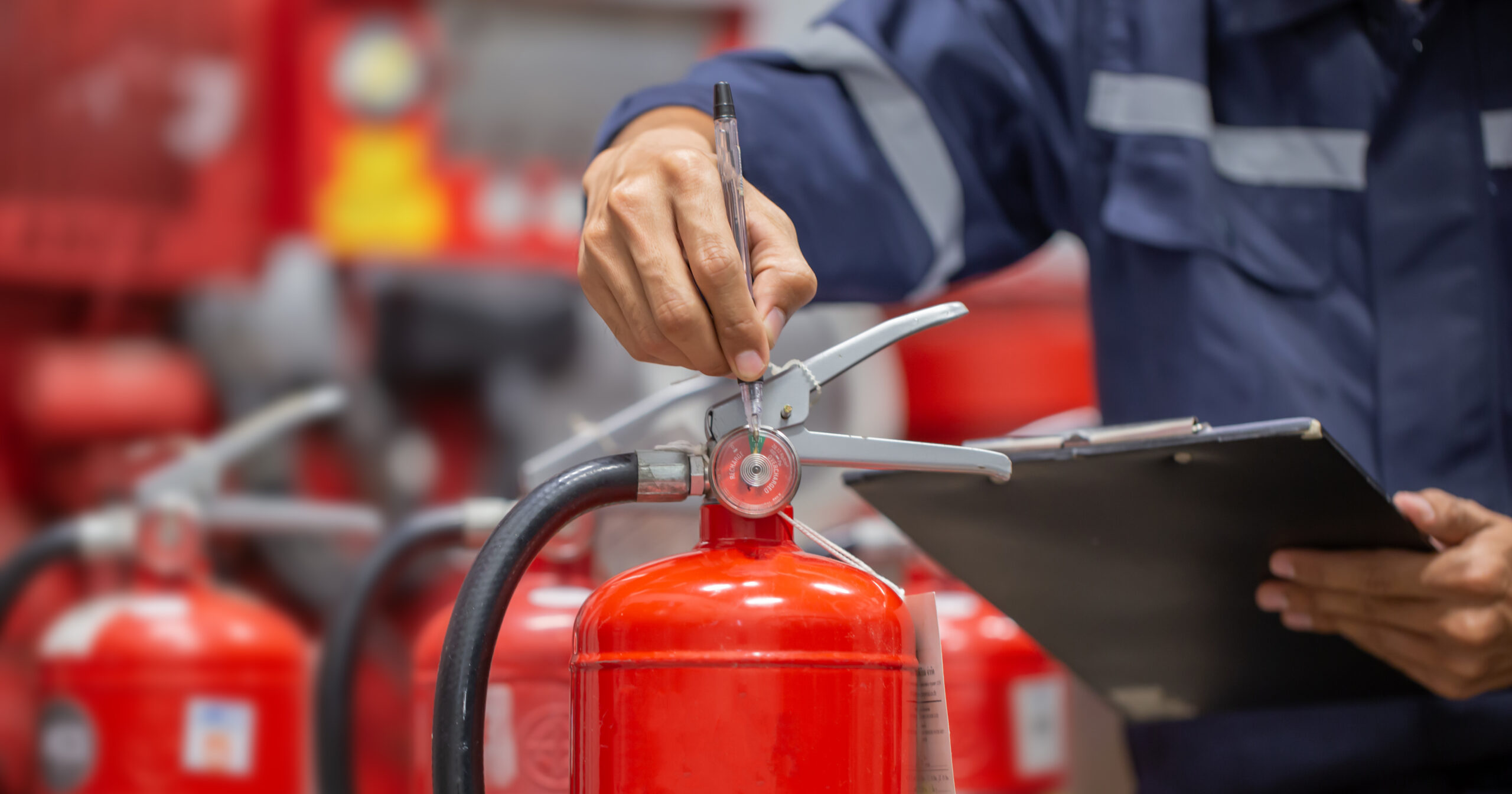
Choosing the correct fire extinguisher is an important part of fire safety for businesses, landlords, and property managers. Many premises have extinguishers installed, but not everyone understands which type is actually suitable for their risks.
Using the wrong extinguisher can make a fire worse or place people in danger. The correct selection and positioning of extinguishers in the UK should follow the guidance as set out in British Standard 5306.
Fire Classes Explained
Fire extinguishers are designed for specific types of fire. Understanding the likely fire risks in your building is the first step in choosing the correct extinguisher.
- Class A: Solid combustibles such as wood, paper, and textiles
- Class B: Flammable liquids such as petrol, paints, and solvents
- Class C: Flammable gases
- Class D: Combustible metals
- Electrical fires: Energised electrical equipment
- Class F: Cooking oils and fats
Main Types of Fire Extinguishers
Water Fire Extinguishers
| Suitable for: | Not suitable for: |
| Class A fires | Class B fires Class D fires Electrical fires Class F fires |
They work by cooling the burning material until the fire is extinguished. A minimum of 2 Class A extinguishers are generally needed per floor, with the exact quantity set out in BS 5306-8.
Foam Fire Extinguishers
| Suitable for: | Not suitable for: |
| Class A fires Class B fires | Class D fires Electrical fires |
Foam forms a blanket over burning liquids, cutting off oxygen and helping prevent reignition.
Environmental Changes
There has been growing attention around the environmental impact of some firefighting foams. Certain older foams containing PFOA (a PFAS “forever chemical”) are now restricted in the UK. Many modern extinguishers now use C6 chemistry or fluorine-free foam, which are designed to reduce environmental impact. If you are unsure about older foam extinguishers on site, a competent fire safety company can check whether replacement is required.
CO₂ Fire Extinguishers
| Suitable for: | Not suitable for: |
| Class B fires Electrical fires | Class A fires Confined spaces |
They work by displacing oxygen and cooling the fire. Because CO₂ leaves no residue, they are ideal for offices, IT rooms, and areas with sensitive electronics.
Dry Powder Fire Extinguishers
| Suitable for: | Not suitable for: |
| Class A fires Class B fires Class C fires Electrical fires | Confined spaces |
These are generally not recommended for enclosed spaces such as offices because the powder can impair visibility and breathing.
Wet Chemical Fire Extinguishers
| Suitable for: | Not suitable for: |
| Class A fires Class F fires | Class B fires Class C fires Electrical fires |
They cool the fire and form a sealing layer over hot oil to prevent re-ignition. They are predominantly used in commercial kitchens and the quantity and rating needed depends on the surface area of where the cooking takes place. Anything greater than 0.4m2 will generally need a fixed extinguishing system.
Alternative Fire Extinguishers
In addition to the traditional types above, there are some newer technologies used in certain environments.
Water Mist Extinguishers
| Suitable for: | Not suitable for: |
| Class A fires Some Class B fires Class C fires Electrical fire Some Class F fires | Some Class B fires Some Class F fires |
Water mist extinguishers use very fine water droplets to cool the fire and reduce oxygen around the flames. Because they use de-ionised water and produce a fine mist, they can be useful in sensitive environments such as hospitals and heritage buildings.
Some water mist systems may be tested to European standards, but they are not always covered in the same way under the traditional guidance within BS 5306, so suitability should always be assessed as part of the fire risk assessment.
P50 Service-Free Extinguishers
P50 extinguishers are composite-bodied extinguishers designed to reduce servicing requirements. Manufactured by Britannia Fire Ltd, these extinguishers are marketed as requiring visual inspection rather than annual servicing for up to 10 years.
The P50 range consists of Water, Foam and Wet Chemical extinguishers to tackle a range of fire classes.
While P50 extinguishers meet product standards, their maintenance regime differs from traditional servicing under BS 5306-3, which normally requires annual servicing by a competent technician. Because of this difference, organisations should carefully consider whether this approach aligns with their fire safety management and risk assessment.
Fire Extinguisher Maintenance
Installing extinguishers is only part of the requirement. They must also be maintained to ensure they work when needed. Under BS 5306-3, this typically includes:
- Routine visual checks
- Annual servicing by a competent person
- Periodic extended servicing depending on the extinguisher type
Proper maintenance ensures the extinguisher remains safe and operational.
The Bottom Line
There is no single extinguisher suitable for every environment. The correct type depends on the specific fire risks within the building. Ensuring extinguishers are correctly selected, positioned, and maintained in accordance with British Standards is essential for protecting people, property, and remaining compliant with UK fire safety legislation. If you are unsure which extinguishers are appropriate for your premises, a fire risk assessment should always be the starting point.